JUPITER Supercomputer Runs a Record 104-Qubit Quantum Simulation
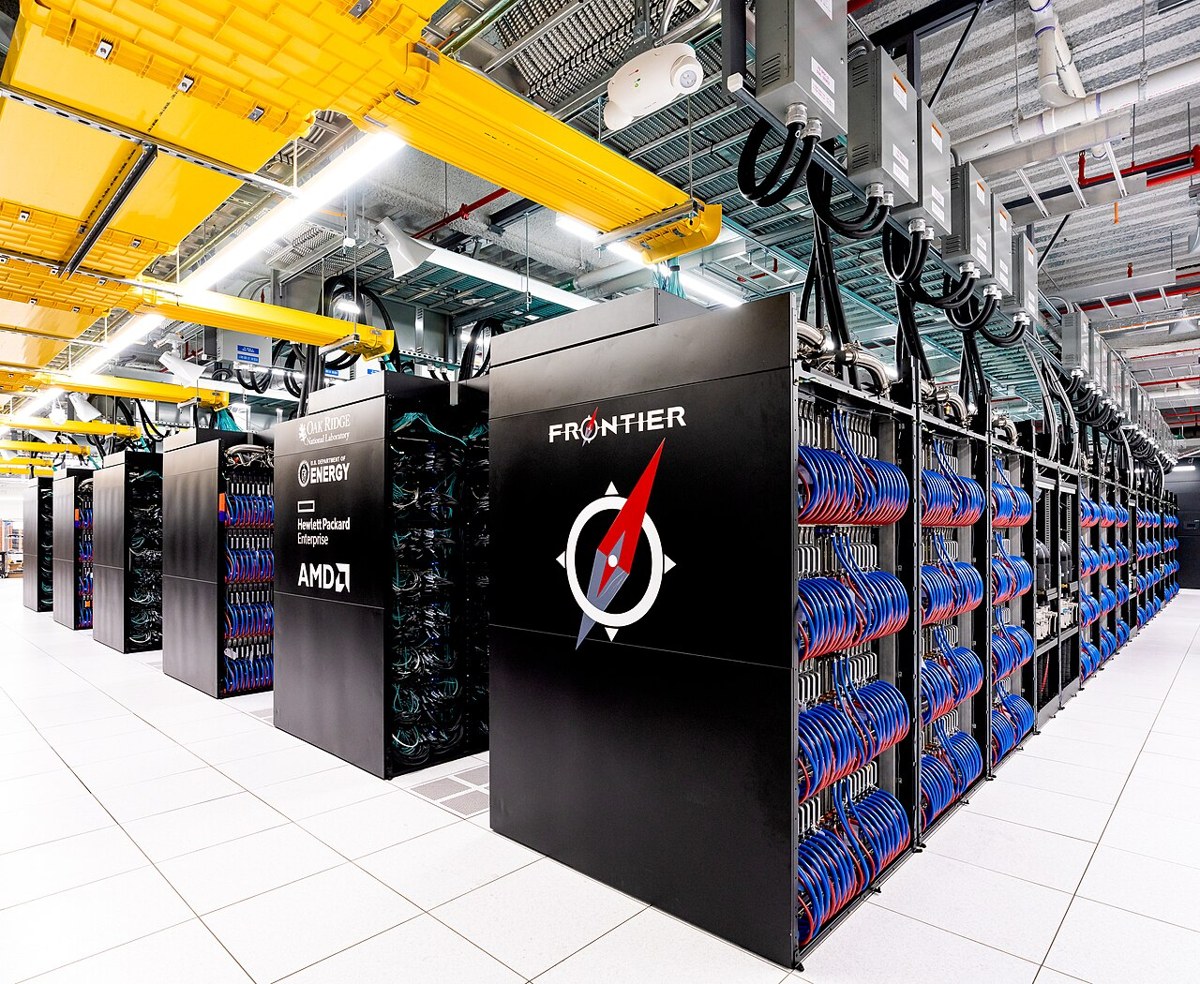
Europe’s first exascale supercomputer has just been used for a very different kind of record. Researchers working with JUPITER, the giant machine installed at the Juelich Supercomputing Centre in Germany, have run a comprehensive fault-tolerant quantum computing simulation covering 104 qubits – the largest exercise of its kind reported so far. The work, carried out with specialists from NVIDIA, underlines a paradox at the heart of modern computing: to understand what quantum machines might one day do, scientists still need the most powerful classical machines ever built.
JUPITER was inaugurated as Europe’s first system capable of more than a quintillion calculations per second, a threshold known as exascale. It was designed for climate modelling, drug discovery, brain research and artificial intelligence. Using it to simulate quantum circuits at this scale shows how fluid the boundary between classical and quantum research has become, and why governments are investing in both at once.
Why Simulate a Quantum Computer at All?
A quantum computer exploits superposition and entanglement to tackle certain problems very differently from a conventional processor. The difficulty is that today’s quantum hardware remains noisy: errors creep in quickly, and useful machines will need fault tolerance – layers of error correction that keep a calculation honest over long runs. Simulating that process classically lets researchers test error-correction schemes, estimate the resources a real machine would need, and find design flaws before expensive hardware is built.
The catch is cost. Every additional qubit doubles the state that a classical simulation may need to describe, which is why pushing a full fault-tolerant simulation to 104 qubits is a serious engineering achievement. It demands enormous memory, careful data movement and software that can spread the work efficiently across thousands of accelerators without drowning in communication overhead. Details of the JUPITER system and its research programme are published by the Juelich Supercomputing Centre.
What JUPITER Brings to the Problem
JUPITER’s architecture pairs high-performance processors with large numbers of graphics accelerators, the same class of hardware that has transformed AI training. Quantum simulation turns out to suit that design well: the mathematics is dense, repetitive and highly parallel. Engineers from NVIDIA, whose accelerators power much of the machine, worked on optimising the simulation stack so that memory bandwidth – usually the bottleneck – could be used far more effectively.
Scale also changes the questions researchers can ask. A simulation of a few dozen qubits can validate a textbook error-correction code. A simulation beyond one hundred qubits starts to resemble the regimes where practical quantum advantage might eventually appear, letting teams study how errors accumulate, how decoding software copes under load, and where the true overheads of fault tolerance will fall. Background on the hardware approach is available from NVIDIA’s data centre research pages.
A Race Being Run on Two Tracks
There is a strategic reading of the result as well. Europe has spent heavily to ensure it is not merely a customer for American and Asian computing technology. JUPITER is the flagship of that policy, and demonstrating leadership in quantum simulation – a field where software insight matters as much as hardware – supports the case that the investment buys scientific sovereignty, not just raw speed.
At the same time, classical simulations set the bar that real quantum hardware must clear. Every time a supercomputer reproduces a supposedly quantum-only result, it forces quantum teams to aim higher. That healthy rivalry has already reshaped several headline claims in recent years, and a 104-qubit fault-tolerant benchmark gives both camps a shared, demanding reference point.
The Economics Behind the Machine
Exascale systems are not cheap to build or to run. JUPITER represents an investment of hundreds of millions of euros, draws power on the scale of a small town, and requires a permanent staff of engineers simply to keep its cooling, networking and storage healthy. Critics periodically ask whether such machines earn their keep in an era when commercial cloud providers rent enormous capacity by the hour. The quantum simulation result is part of the answer: certain workloads – tightly coupled, memory-hungry, dependent on the fastest possible interconnects – still belong on machines designed as single instruments rather than rented fleets.
There is also a talent argument. Supercomputing centres train the engineers who later staff Europe’s technology industry, and flagship systems give universities a reason to teach the unglamorous disciplines – numerical methods, parallel programming, systems software – on which everything else quietly depends. A record set on JUPITER therefore pays out in three currencies at once: scientific results, industrial capability and people. When finance ministries evaluate the next generation of machines, those combined returns, not any single headline, will decide whether the exascale era gets a successor.
There is a final, practical reason results like this travel quickly through the research community: reproducibility. A simulation methodology published alongside a record run becomes a tool others can apply to their own hardware designs within months. Quantum computing has suffered from claims that could not be independently checked; work performed on a public supercomputer, by named institutions, with methods open to scrutiny, is the corrective. Whatever the eventual architecture of useful quantum machines turns out to be, it will have been designed in the open, on systems like this one, by people who published their numbers and invited the world to beat them.
What Happens Next
The practical outputs are likely to be software as much as headlines: better simulators, better decoders and clearer estimates of how many physical qubits a useful, error-corrected machine will require. Those estimates feed directly into roadmaps at quantum hardware companies and into funding decisions by governments deciding how long the road to practical quantum computing really is.
For now, the record stands as a reminder that the quantum era will not arrive in a single leap. It is being rehearsed, qubit by simulated qubit, on machines like JUPITER – classical giants patiently mapping the territory their quantum successors hope to claim.


