Gulf of Mexico Marine Life Still Declining Years After the BP Oil Spill
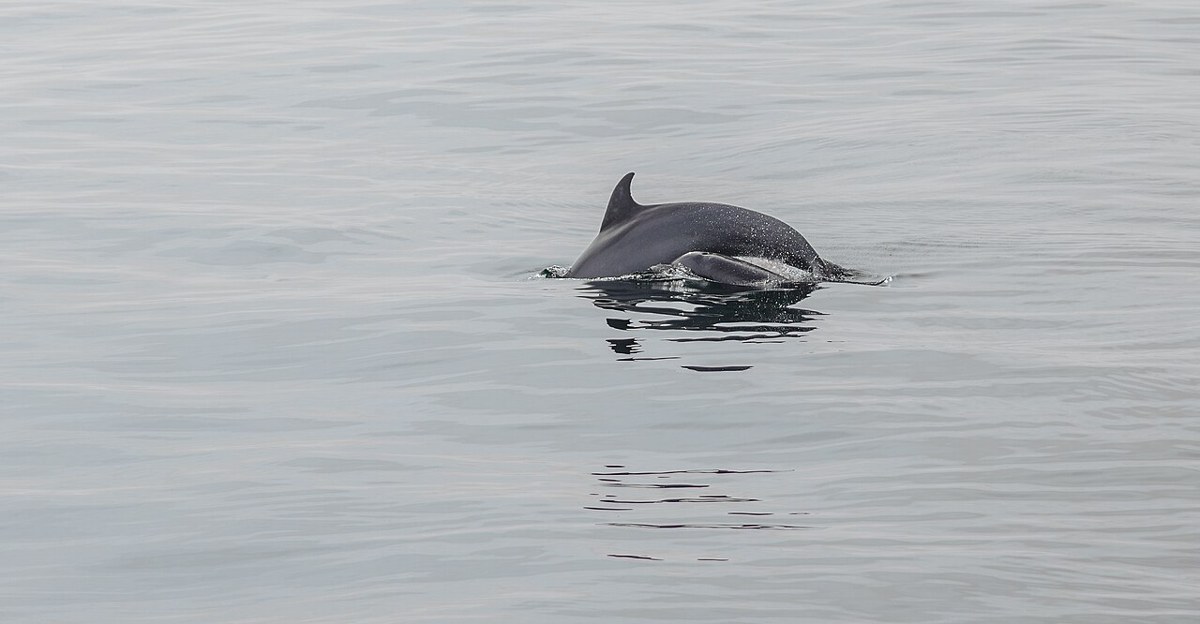
More than a decade after the Deepwater Horizon disaster, the Gulf of Mexico is still telling a sobering story. A new study examining marine life across the Gulf has found that populations of many species declined dramatically in the years following the 2010 BP oil spill, challenging the comforting assumption that ecosystems simply bounce back once the visible oil disappears and the cameras move on.
The BP spill was the largest marine oil disaster in history, releasing millions of barrels of crude into the Gulf over 87 days. Beaches were cleaned, fisheries eventually reopened and a vast settlement funded restoration projects across five states. Yet the new findings suggest that beneath the surface, the biological ledger has kept moving in the wrong direction for many of the species scientists can track.
What the Study Found
Researchers drawing on long-running survey data report broad declines across groups ranging from fish to invertebrates in the years after the spill. The pattern matters because it is not confined to a single species or a single hotspot near the wellhead. A regional, multi-species decline points instead to food-web effects: when the small organisms at the base of the system are hit, scarcity propagates upward to the predators that depend on them, year after year.
Scientists involved in Gulf research have long warned that the spill coincided with other pressures – warming water, hypoxic dead zones fed by river nutrients, habitat loss in coastal wetlands and heavy fishing pressure. The study does not claim oil explains everything. Its warning is subtler: a system already stressed has less capacity to absorb a shock, and the shock itself may have weakened the Gulf’s resilience for a generation of marine animals. Ongoing restoration science is coordinated in part through the NOAA Gulf restoration programme.
Why Recovery Is So Slow
Oil does not vanish when the slick breaks up. Compounds settle into sediments, wash into marshes and linger in the tissues of long-lived animals. Dolphins in heavily oiled bays have shown elevated rates of lung and adrenal disease and poor reproduction in studies conducted since the spill. Sea turtles, already threatened, lost nesting momentum. Deep-water corals near the well site were damaged by a mixture of oil and chemical dispersants, and deep-sea communities grow so slowly that recovery is measured in decades, not seasons.
There is also the problem of baselines. Much of the Gulf was never surveyed with modern rigour before 2010, so scientists are reconstructing a damaged present against an imperfectly remembered past. That uncertainty is often used to delay protective action, even as the trend lines in the data that do exist point consistently downward.
The Human Coast
The Gulf’s ecology is also its economy. Commercial and recreational fisheries, tourism and coastal communities from Texas to Florida depend on the same nurseries – marshes, seagrass beds and estuaries – that marine life needs. When shrimp, oysters, red snapper or menhaden falter, the losses arrive quickly on docks and in processing plants, and slowly in the form of towns whose working waterfronts quietly hollow out.
Restoration money from the BP settlement remains the largest environmental fund of its kind, financing marsh rebuilding, barrier island repair and water-quality projects. The new study raises the stakes for how that money is judged: not by projects announced, but by whether animal populations actually stabilise and turn upward. Independent science on the region continues through the Gulf of Mexico Research Initiative’s successor programmes and university consortia.
What Fishermen See First
Long before survey data reaches a journal, the people who work the Gulf daily register the change. Shrimpers describe grounds that produced for generations now yielding thin, unpredictable seasons. Oyster farmers watch reefs struggle against freshets, heat and disease in combinations their fathers never faced. Charter captains run farther for fish that once gathered close to shore. None of these accounts is a controlled study, and scientists are right to insist on data – but the consistency between the lived experience of the coast and the direction of the formal measurements is itself information, and it is rarely reassuring.
That alignment matters politically. Restoration programmes survive on public support, and public support is strongest where residents can connect spending to the water they know. If the new study prompts Gulf states to publish clearer, more frequent public scorecards – this marsh rebuilt, this reef monitored, this species stabilising – it will have done a service beyond its findings. Decline that is measured openly can be argued about honestly, funded properly and, eventually, reversed. Decline that is only suspected can be ignored for another decade.
For readers far from the Gulf, the study’s relevance is not parochial. Every coastline lives downstream of the same combination of warming seas, nutrient runoff, habitat loss and industrial risk, differing only in proportion. The Gulf is simply the most intensively studied example of what happens when those pressures coincide with a catastrophic spill – a preview, assembled from hard data, of trajectories other regions can still choose to avoid. Its declining species are not only a regional loss. They are a measurement of how much stress a rich ecosystem can absorb before abundance itself begins to fail, and that measurement belongs to everyone.
A Test of Patience and Honesty
Environmental disasters are usually narrated in two acts: the emergency and the recovery. The Gulf’s story refuses that script. Its third act – the long, uneven aftermath – is less dramatic and far more important, because it decides what kind of sea the next generation inherits.
The study’s message is not that recovery is impossible. Marshes can be rebuilt, water can be cleaned and fisheries can be managed back to health, as other regions have shown. It is that recovery must be measured honestly, over decades, against the biology itself – not against the news cycle, which declared this story over long ago.