Continuous Glucose Monitors Help Type 2 Diabetes Patients Stay in Range Longer
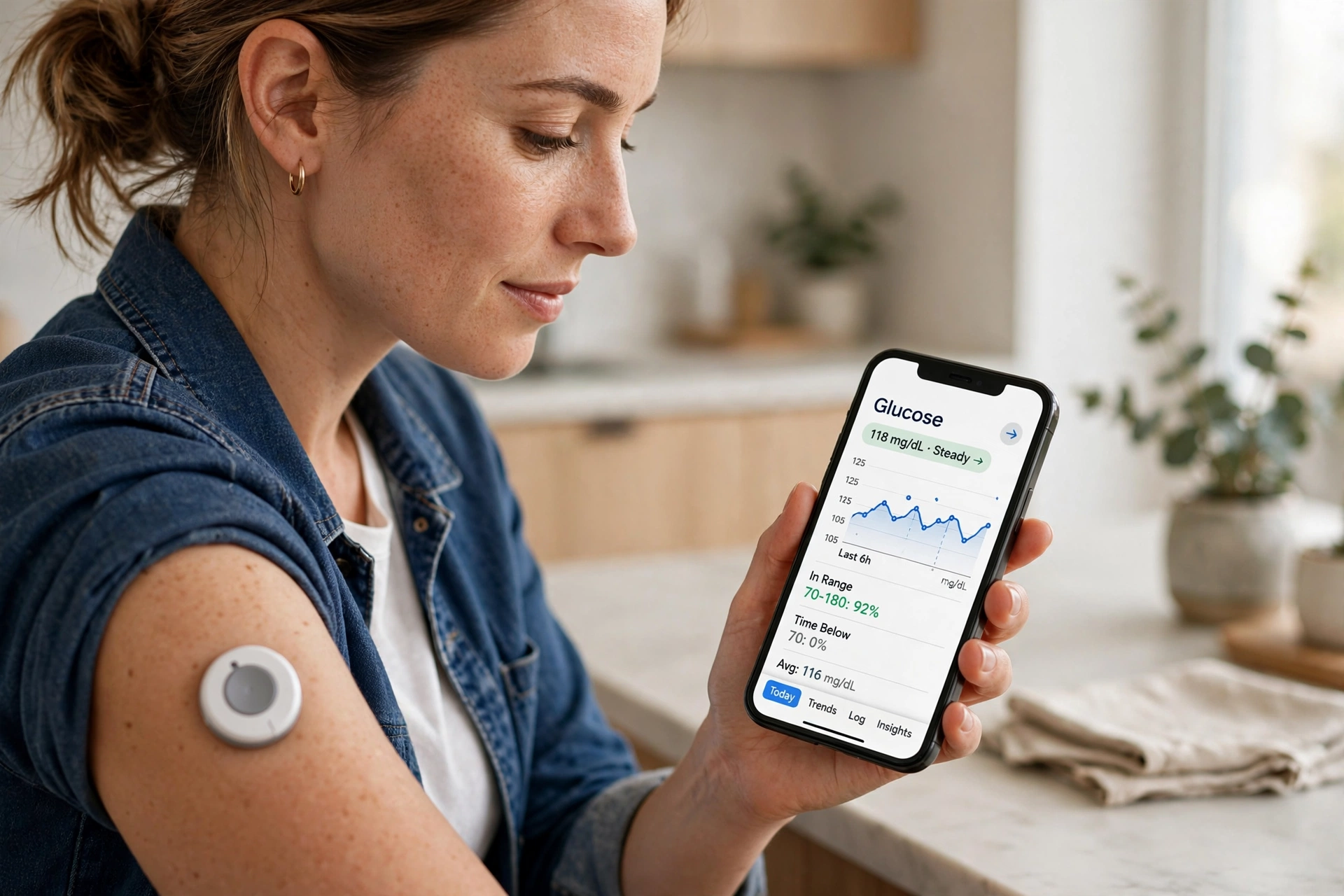
For millions of adults living with type 2 diabetes, managing blood sugar has traditionally meant finger-prick tests a few times a day, educated guesses about meals, and long gaps between doctor visits. A major new clinical trial now suggests that a small wearable sensor can change that picture in a meaningful way. The study, described as the largest clinical trial of its kind and published in the New England Journal of Medicine, found that continuous glucose monitors helped adults with type 2 diabetes who do not use insulin spend approximately five more hours a day in their target blood sugar range.
What the trial found
Continuous glucose monitors, often shortened to CGMs, are small sensors worn on the arm or abdomen. Instead of a single reading at a single moment, they measure glucose levels every few minutes, day and night, and send the results to a phone or reader. That steady stream of information shows not just where blood sugar is, but where it is heading, how it responds to a particular meal, and what happens overnight while the wearer is asleep.
According to the research team reporting the findings, participants using the monitors spent roughly five additional hours a day within their recommended glucose range compared with standard care. Reporting from the University of Colorado Anschutz Medical Campus describes the trial as the largest of its kind for this group of patients, which matters because most earlier CGM evidence focused on people who already use insulin.
Why five hours a day matters
Five extra hours in range may sound like a simple number, but clinicians measure diabetes control partly through what is called time in range. The more of the day a person spends within target levels, the lower the long-term risk of complications affecting the eyes, kidneys, nerves and heart. Every hour spent with blood sugar running too high adds to that risk, while sharp drops carry their own dangers, including dizziness and falls, particularly for older adults.
Just as importantly, the benefit in this trial came for people who are not on insulin. That is a much larger population. Many people with type 2 diabetes manage the condition with diet, activity and oral medication, and they have historically had less access to monitoring technology. The result strengthens the argument that CGMs should not be treated as specialist equipment for a minority of patients, but as a practical everyday tool for a much wider group.
Feedback changes behaviour
Doctors who work with glucose data often point to a simple effect: feedback changes behaviour. When a person can see their glucose rise after a large plate of white rice, settle after a ten-minute walk, or stay steady after a higher-protein breakfast, the connection between daily choices and blood sugar stops being abstract. Adjustments become experiments with visible results rather than lectures remembered from a clinic appointment.
That feedback loop also helps clinicians. Instead of relying on a single average reading covering three months, they can see patterns: dawn rises, post-lunch spikes, or overnight lows. Treatment, food advice and activity plans can then be adjusted with far more precision. For readers weighing the wider cost of managing chronic conditions, our guide to health insurance add-ons and riders shows how planning ahead can soften the financial side of long-term care.
Barriers still to solve
The technology is not without obstacles. Sensors need replacing regularly, which creates an ongoing cost that insurance systems in many countries do not yet fully cover for people who are not using insulin. Some wearers find the alarms annoying or the data overwhelming at first, and clinics need time and training to review the information patients now generate. There are also questions about who benefits most, and whether the improvements seen in a structured trial are maintained over several years in everyday life.
Even so, the direction of travel is clear. Sensors are getting smaller, cheaper and easier to read, and they increasingly connect with the phones people already carry. As the market for accessible health technology grows, the same trend we see in budget smartphones in India, where once-premium features reach ordinary buyers, is now appearing in medical devices as well.
The bottom line
This trial does not claim that a sensor alone controls diabetes. Food, movement, medication and medical support still do the heavy lifting. What the evidence does show is that better information, delivered continuously and in plain sight, helps people make those things work harder. Five more hours a day in a healthy range is a significant gain for a group of patients who have often been offered the least technology, and it makes a strong case for widening access to continuous glucose monitors well beyond insulin users.


