Budget Smartphones in India 2026: Flagship Features at Honest Prices
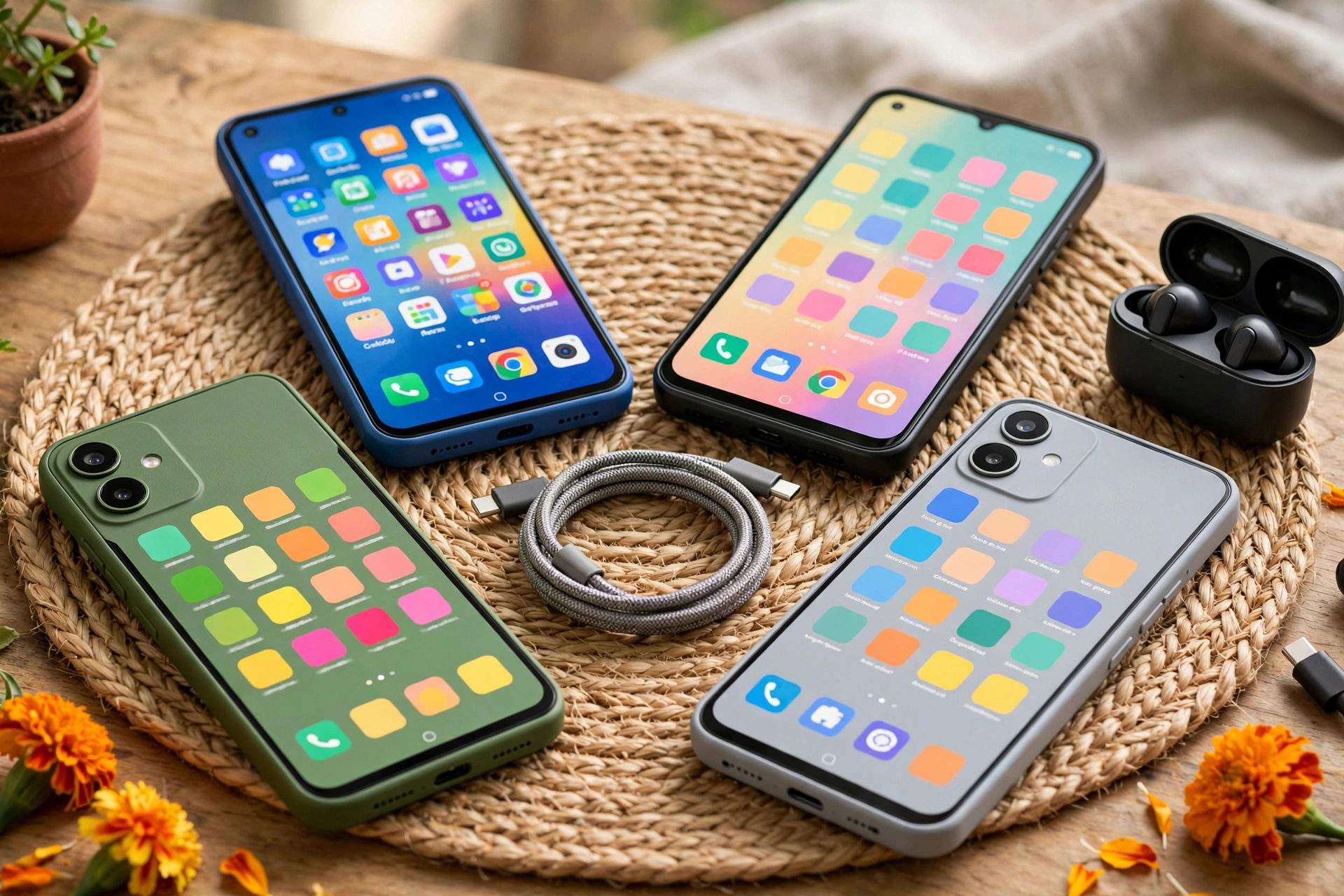
India’s budget smartphone segment is the most competitive technology market in the country, and in 2026 buyers are winning. Features that were exclusive to expensive flagships three years ago, including fast high-refresh displays, large batteries with fast charging and capable multi-lens cameras, now appear in phones that cost a fraction of the price. This guide explains what to look for at each price point, and what you can safely skip.
Displays: The Flagship Feature That Already Arrived
The screen is the part of a phone you interact with all day, and it is where budget phones have improved most. AMOLED displays with 120Hz refresh rates, once a premium signature, are now common in the mid-budget range, bringing smoother scrolling, better contrast and easier reading outdoors. If you watch a lot of video or play games, prioritise a bright AMOLED panel. If your use is mainly calls, messages and social apps, a good LCD screen at a lower price is still a sensible choice, and the money saved is better spent on storage.
Reference listings on sites such as GSMArena make it easy to compare display sizes, brightness and refresh rates across models before you buy, and checking real specifications there is far more reliable than trusting the claims on a shop banner.
Battery and Charging: Big Numbers That Matter
Battery capacity in budget phones has settled around 5,000mAh and above, which comfortably lasts a full day of heavy use and two days of light use for most people. Fast charging matters almost as much as capacity: a phone that recovers half its charge in half an hour changes how you use it, because a short top-up before leaving home replaces overnight planning. When comparing models, check both the battery size and the charging speed, and confirm whether a charger is included in the box, since some brands have started removing it.
Read also on Aavot: How Technology Businesses Can Build Visibility Through Useful Content
Cameras: Judge the Main Sensor, Not the Lens Count
Budget phones often advertise three or four rear cameras, but in practice the main sensor does nearly all the real work. A good 50-megapixel main camera with optical or decent electronic stabilisation will produce better everyday photos than a cluster of weak secondary lenses. Low-light performance and reliable portrait mode matter more than headline megapixels once you pass 50. The front camera deserves a look too if video calls and selfies are a big part of your day.
Performance, Software and the Hidden Costs
For smooth everyday performance, look for a current mid-range processor paired with at least 6GB of RAM, and 8GB if the price difference is small. Storage of 128GB is the practical minimum in 2026, given the size of apps, photos and offline video. Software support is the hidden cost many buyers miss: a phone that promises three or four years of security updates will stay safe and usable far longer than a slightly faster phone abandoned after one year. Checking a brand’s published update policy, and the basics of the Android platform version the phone ships with, takes two minutes and pays off for years.
What You Can Safely Skip
Several advertised features add cost without adding much value at this price level. Wireless charging is rare and slow in budget models. Extreme megapixel counts on secondary cameras, depth sensors listed as separate lenses, and gaming branding on non-gaming chips are marketing, not performance. Even 5G, while worth having for future-proofing in cities where coverage is strong, should not outweigh a better display, battery or update policy.
Choosing at Your Price Point
At the entry level, spend on battery, storage and a clean software experience. In the mid-budget range, add the AMOLED 120Hz display and fast charging. At the top of the budget segment, expect the full package plus longer update support. Whichever point you choose, the honest summary of 2026 is good news: flagship features have genuinely arrived at honest prices, and a careful buyer no longer needs to overpay.


