Black Holes Bend Light and Warp Time Around Them
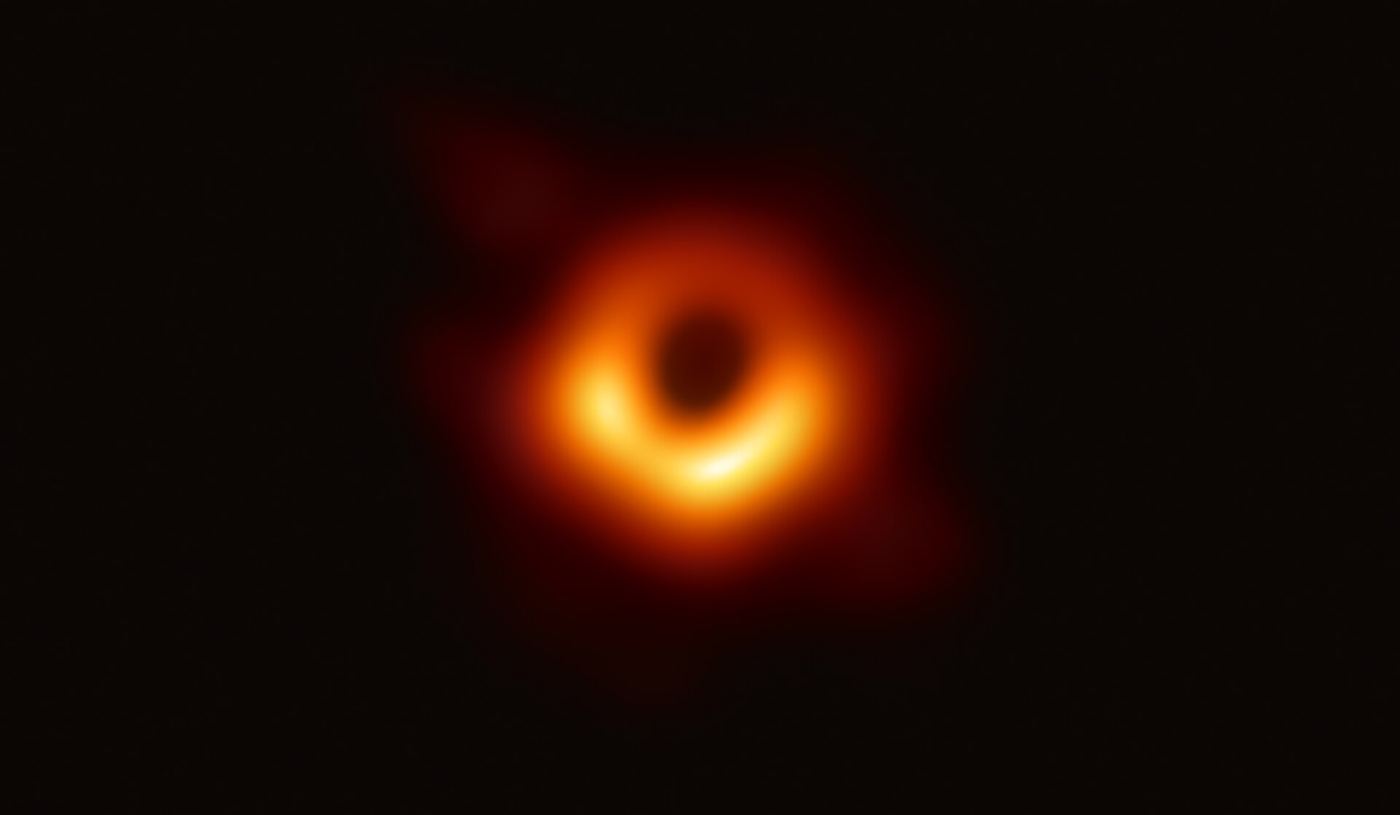
A black hole is a place where gravity has won completely. When a massive star dies, its core can collapse under its own weight until it is squeezed into a point so dense that nothing, not even light, can escape from it. The boundary of this region is called the event horizon, and anything that crosses it is lost to the outside universe forever. Black holes come in many sizes. The smallest form from single stars, while the largest, called supermassive black holes, sit at the centres of galaxies and weigh as much as millions or billions of Suns. The one at the centre of our own Milky Way is called Sagittarius A*, and astronomers have tracked stars whipping around it at astonishing speeds, their orbits revealing the invisible mass at the heart of the galaxy.
What the Evidence Shows
In 2019 astronomers achieved something long thought impossible: they photographed a black hole. Telescopes across the world were linked together to form a single instrument the size of the Earth, and the resulting image of the black hole in galaxy M87 showed a glowing ring of hot gas around a dark shadow, exactly as theory predicted. The picture confirmed ideas that had existed only in equations for a century, and later images revealed the magnetic fields threading the ring. Black holes also send out ripples in space itself, called gravitational waves, when two of them collide, and detectors on Earth now catch these faint tremors regularly. Each new observation tests our understanding of gravity, and black holes remain the most extreme laboratories in the universe. Reporting and analysis from sources such as NASA track the same developments, and specialists following the black holes bending light around them say the direction is now consistent across independent lines of evidence.
The Wider Context
Funding bodies are watching the black holes bending light around them closely because the work sits at the junction of basic curiosity and practical return. Grant panels increasingly ask for a path from discovery to application, while researchers push back that the most valuable uses of fundamental science are rarely the ones written into the original proposal. The tension is productive when both sides stay honest about timescales.
What Happens Next
The long view on the black holes bending light around them is that fields advance by accumulation rather than by single announcements. This result adds a solid, checkable piece to a structure many teams are building, and its authors have shared their data so the piece can be tested from every side. That is how the picture eventually becomes reliable enough to act on. You can follow related developments in our coverage of science.
It is also worth remembering how quickly the picture in this area has changed before. Positions that looked settled a few years ago have been revised as new data arrived, and the same humility is appropriate now. The strongest coverage of this subject, and the most useful advice, tends to come from sources that update their views openly when the facts move, rather than defending an earlier position long after it has stopped fitting the evidence available.