AI Study Companions: How Students Are Preparing Smarter in 2026
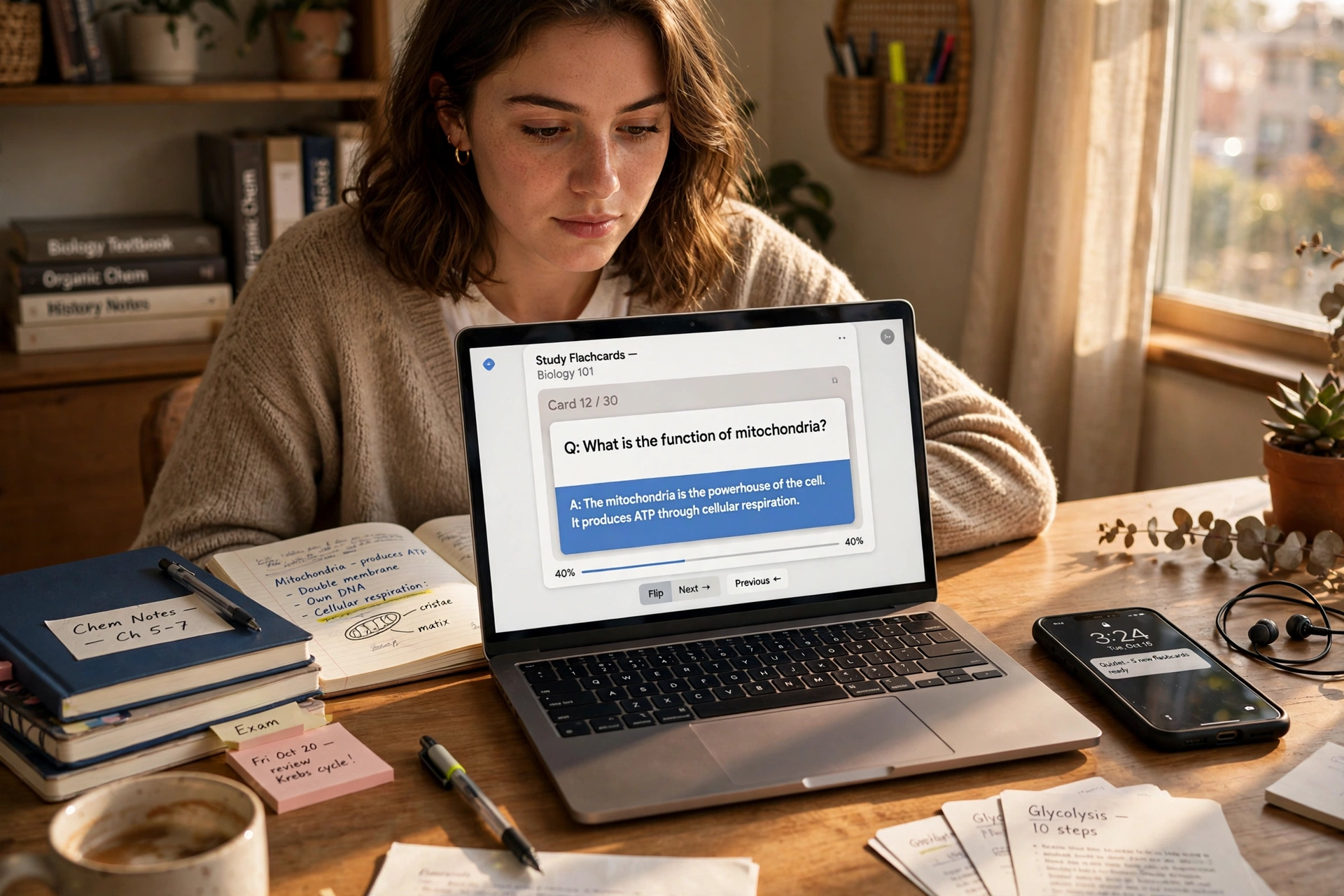
Something has quietly changed in the way students prepare for exams. The library desk stacked with printed notes is still there, but next to it now sits a phone or laptop running an AI study companion — a tool that quizzes, explains, summarises and even predicts which topics a student is most likely to forget. In 2026, this is no longer an experiment. It is becoming the default way millions of learners study.
From Passive Reading to Active Practice
The biggest shift is from passive reading to active practice. Traditional revision meant re-reading chapters until the words felt familiar. Research on learning science has long shown that familiarity is a poor measure of knowledge. Testing yourself, by contrast, forces the brain to retrieve information, and that effort is what makes memories stick. AI tools automate this process: they turn any chapter, PDF or lecture transcript into flashcards and practice questions within seconds.
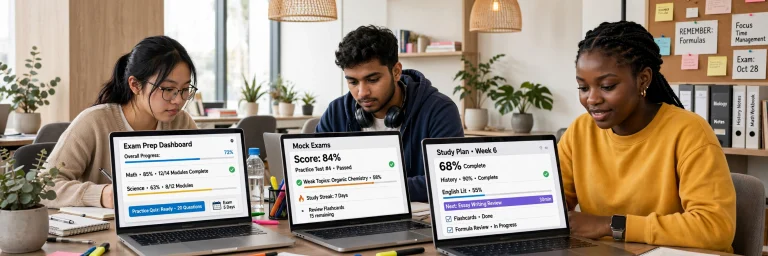
Students preparing for competitive exams have been among the fastest adopters. Adaptive mock tests adjust their difficulty in real time, so a learner who masters percentages quickly moves on to harder problems instead of wasting time on questions they already know. Many aspirants now combine these tools with structured online mock test practice to simulate real exam pressure while tracking their progress topic by topic.
Personal Tutors at a Fraction of the Cost
Private tutoring has always given wealthier students an advantage. AI study companions are narrowing that gap. A student in a small town can now ask unlimited questions at midnight, request an explanation in simpler words, or get a worked solution step by step — things that were once only possible with a personal tutor. Teachers are adapting too, using these tools to generate worksheets and identify which concepts an entire class is struggling with.
Educators caution, however, that the tools work best as companions rather than replacements. The guidance published by UNESCO on AI in education stresses that technology should support human teaching, not substitute for it. Students who simply copy AI-generated answers without engaging with the material tend to perform worse when the screen is taken away.
What the Data Says About Results
Early studies of AI-assisted study routines point in a consistent direction: learners who use spaced repetition and self-testing improve retention measurably compared with those who only re-read. The advantage comes less from the AI itself and more from the habits it enforces — short daily sessions, immediate feedback, and revision scheduled just before the point of forgetting.
There are also risks to manage. AI tools occasionally produce confident but wrong explanations, especially in niche subjects. The healthiest approach treats the tool as a sparring partner: use it to generate questions, check answers against trusted textbooks, and ask a teacher when something looks off. Students who verify rather than blindly trust get the benefits without the pitfalls.
How to Build an AI-Assisted Study Routine
Start small. Pick one subject and convert your next chapter into flashcards and a short quiz. Study in focused 25-minute blocks, review the questions you got wrong the next day, and repeat them after a week. Keep one weekly session completely screen-free — writing answers by hand on paper still matters for exams conducted offline. Finally, track your mock test scores over time; the trend line tells you more than any single result.
Parents and teachers can help by asking students to explain what they learned rather than asking how many hours they studied. Explanation is the ultimate test of understanding, and no app can fake it.
The Road Ahead
Exam boards are beginning to respond. Some are redesigning questions to reward reasoning over recall, precisely because recall has become cheap. That is arguably a healthy development: if machines can store facts, education can focus on judgement, creativity and application. The students who thrive in 2026 will not be those who avoid AI, but those who learn to use it critically — as a tool for thinking harder, not thinking less.